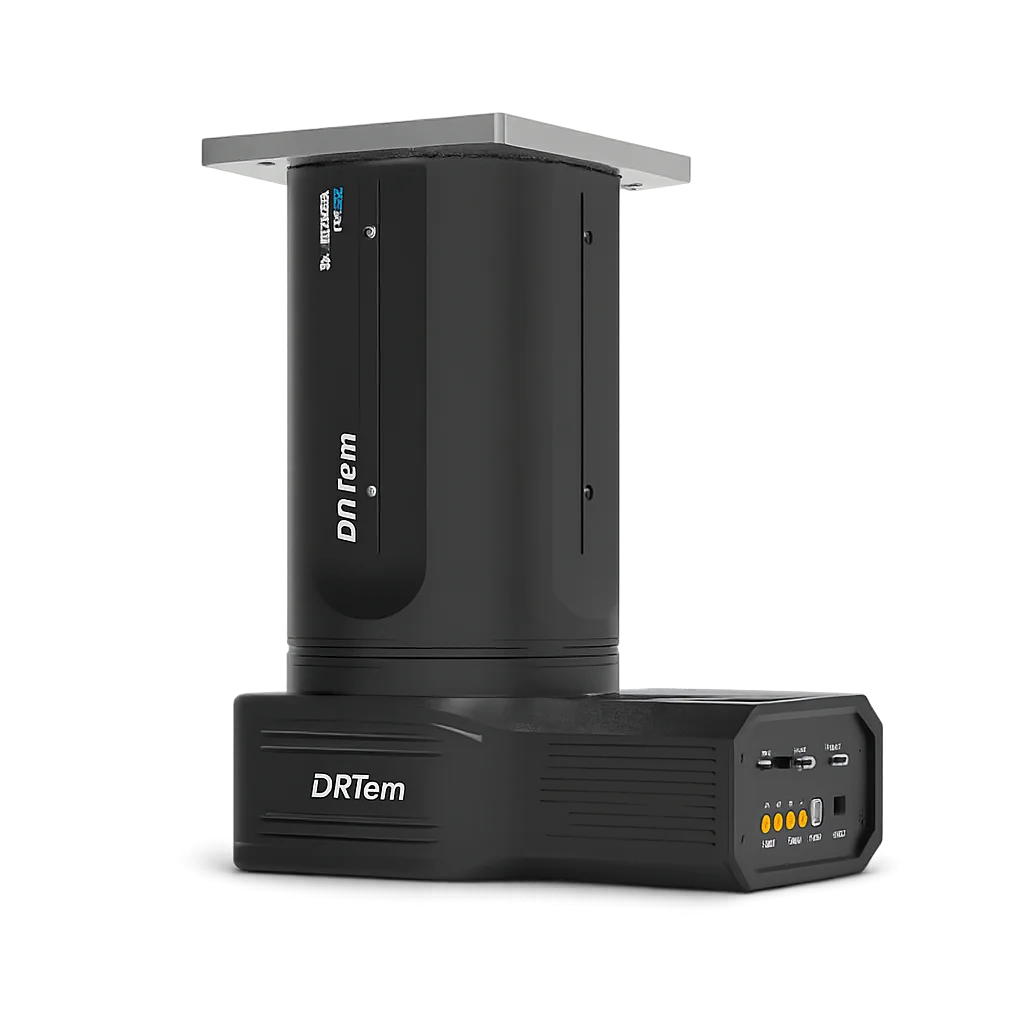
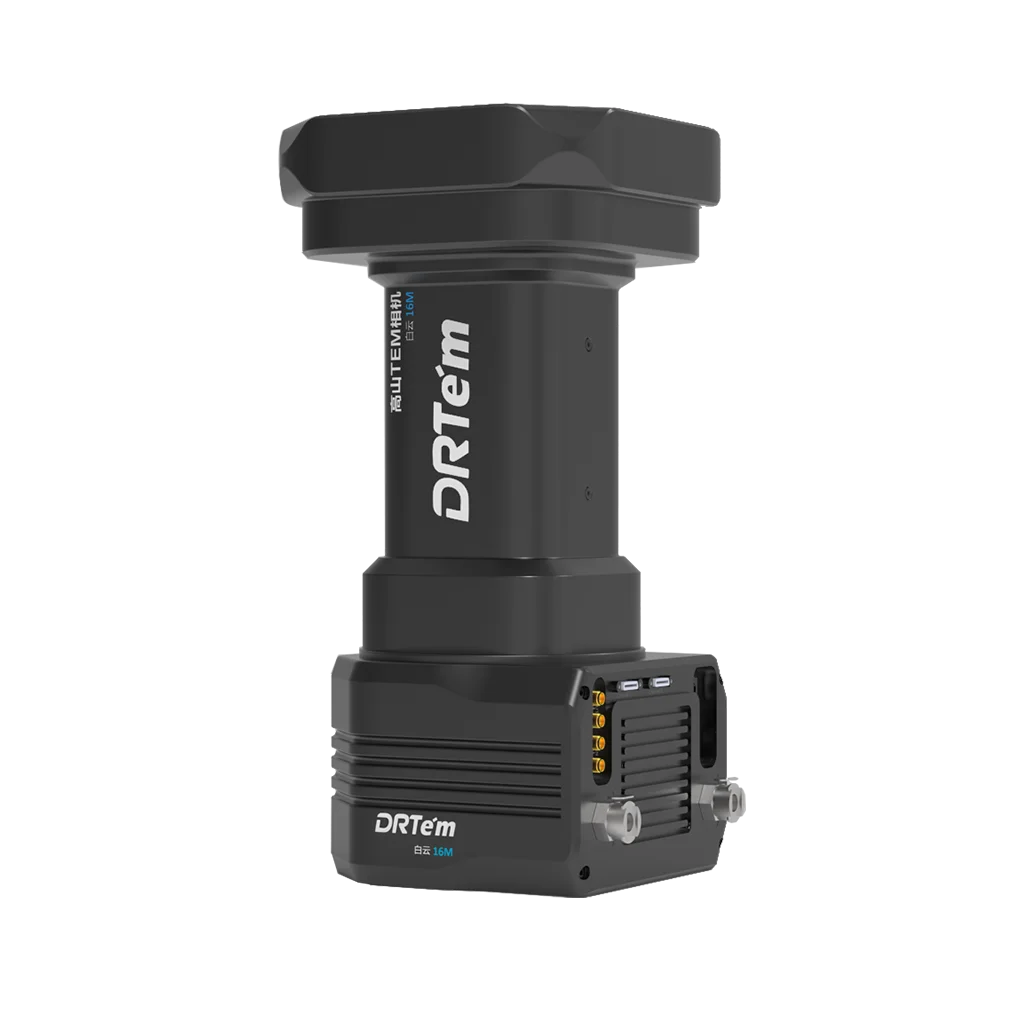
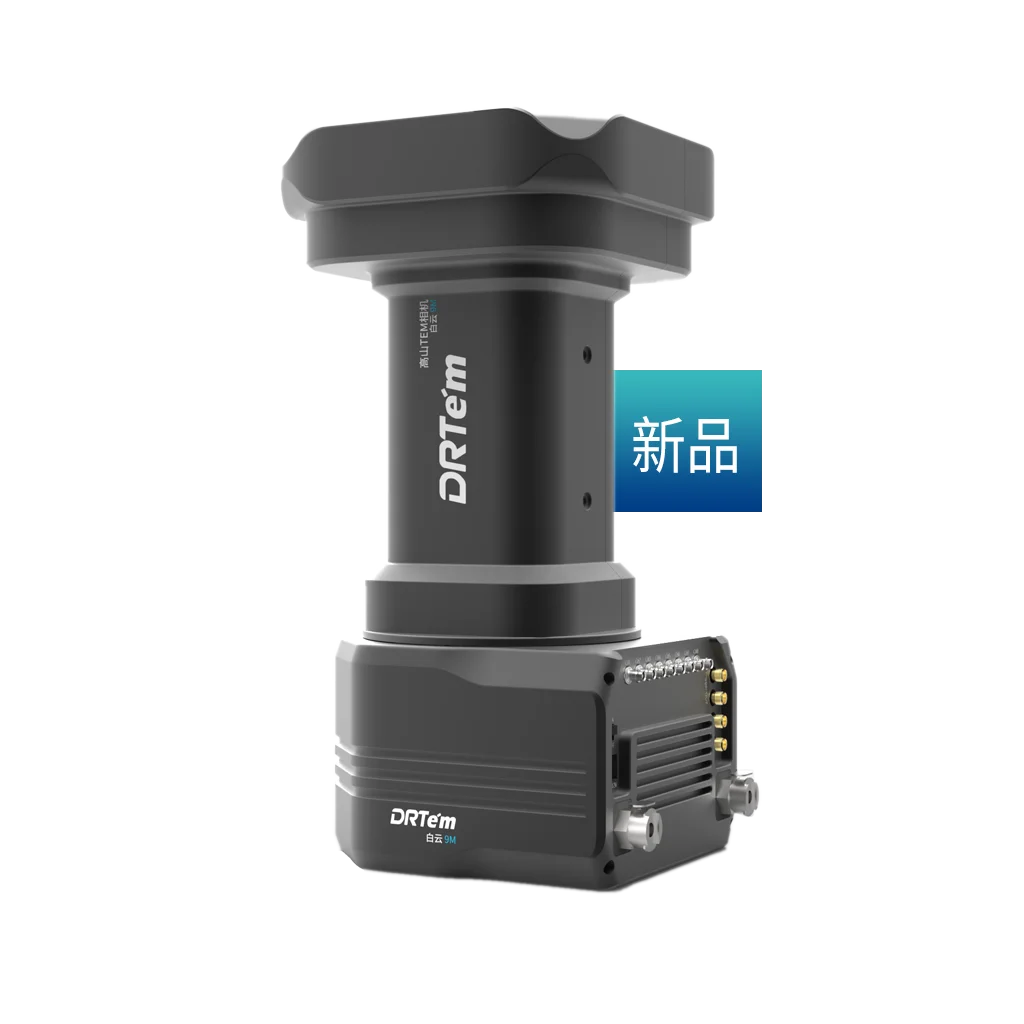
Against the backdrop of long-term reliance on imported technologies in this critical field, DRTem took the lead in independently developing high-performance, domestically produced TEM cameras—overcoming multiple core technological barriers. Our Baiyun Series products have been successfully applied in cutting-edge fields such as structural biology, advanced materials imaging, and semiconductor defect analysis. This marks a significant shift in China’s electron microscopy industry—from “usable” to truly “advanced” in core component innovation.
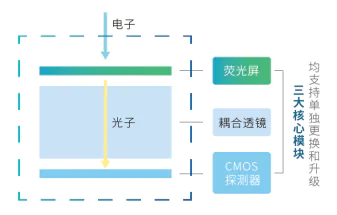
Indirect electron detection cameras are among the most traditional and widely used types of electron microscopy cameras. Their structure typically includes the following components: a scintillator screen, a prism or fiber-optic coupler, and a CCD or CMOS detector.
The imaging process consists of the following steps:
1. The electron beam from the transmission electron microscope strikes the scintillator screen, converting the electron signal into a light signal.
2. The generated light signal is transmitted via an optical system (such as a lens or fiber-optic coupler).
3.The CMOS or CCD detector receives the transmitted light signal and converts it into a digital image.